Journal
Better than doomscrolling: four things digging up your past does for your brain
By Smritis
The memory trick that beats memory tricks.
In a 2026 study, people who wove words into a story remembered as many or more of them than with the lab’s gold-standard memory technique.4 It is an old finding made new: in 1969, people who made up stories remembered about seven times as many words as people who simply studied them.5
Scattered memories fade. Stories stay.
Giving a memory a beginning, middle and end gives your brain hooks to find it again.8
Then why do so few of us do it? Most evenings end with a thumb on a screen. Scrolling feels like rest, but it rarely is. In one study, the longer people passively scrolled Facebook, the worse they felt afterwards;9 students who cut their social media to about half an hour a day felt less lonely and less low within three weeks.10 Even recording a moment to share it can leave us remembering less of it.11
AI that thinks for you, or AI that makes you remember. AI can now write the essay and answer the question before we have finished asking it. That has a cost. In an early MIT study, people who wrote essays with ChatGPT showed weaker brain engagement than people who wrote on their own, and many could not quote what they had just written;12 in a survey of 666 people, those who leaned most on AI tools scored lowest on critical thinking.13 Both are early findings, but they point the same way: what we hand over, we stop practising.
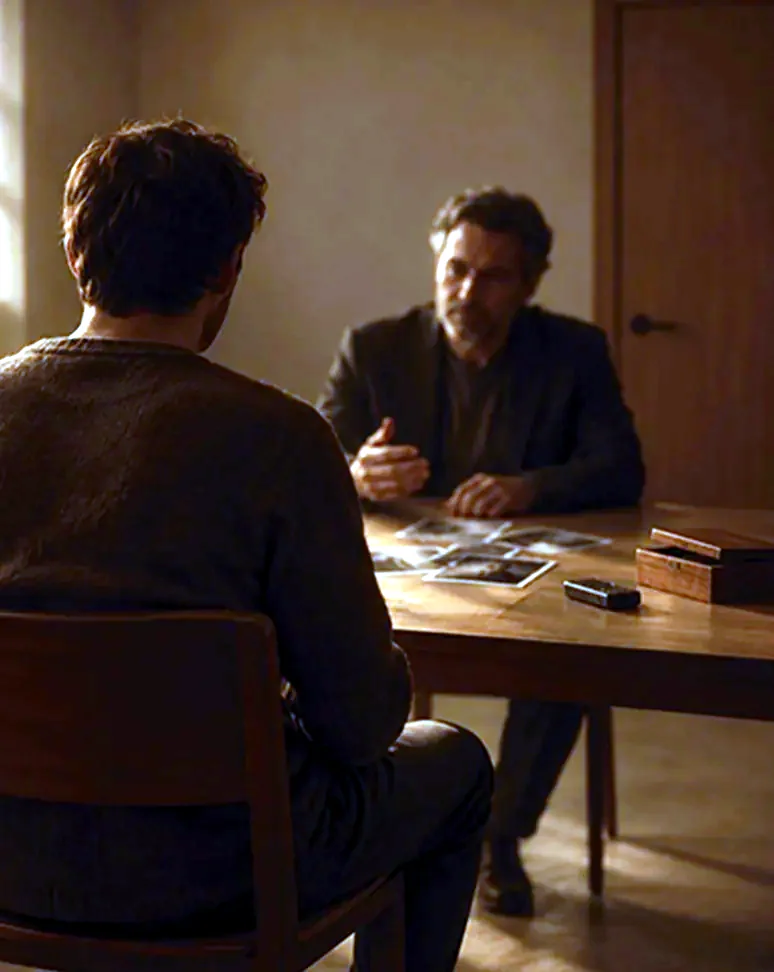
A Dig turns this around. Your Dig coach is an AI too, but it does more listening than talking. It gives you the right stimulus, a question about a place, a face, a sound or a smell, the kind of cue that can bring back a memory you thought was lost,14 and then it listens. It helps you reach your hidden memories; it never supplies them. Every memory, every name and every word comes from you: that is the workout. Then Storify gives what you found a beginning, a middle and an end, so it stays, for you and for the people you share it with.
What it is not. A Dig is not a treatment, and we make no medical promise. In people with dementia, story therapy has improved scores for thinking in short trials,15 and reminiscence has brought small gains in mood, thinking and quality of life in some settings,16 though the studies are small and mixed. What the research does say is simpler: your past is still there, and reaching for it asks more of your brain than the feed ever will.
— Smritis
References
- Svoboda, E., McKinnon, M. C., & Levine, B. (2006). The functional neuroanatomy of autobiographical memory: A meta-analysis. Neuropsychologia, 44(12), 2189–2208. doi.org/10.1016/j.neuropsychologia.2006.05.023
- Cabeza, R., & St Jacques, P. (2007). Functional neuroimaging of autobiographical memory. Trends in Cognitive Sciences, 11(5), 219–227. doi.org/10.1016/j.tics.2007.02.005
Show all 16 referencesShow fewer
- Wilson, R. S., Boyle, P. A., Yu, L., Barnes, L. L., Schneider, J. A., & Bennett, D. A. (2013). Life-span cognitive activity, neuropathologic burden, and cognitive aging. Neurology, 81(4), 314–321. doi.org/10.1212/WNL.0b013e31829c5e8a
- Reysen, M. B., & Fischer, Z. H. (2026). Adaptive memory: Story processing improves recall performance. Evolutionary Psychology, 24(1). doi.org/10.1177/14747049261421967
- Bower, G. H., & Clark, M. C. (1969). Narrative stories as mediators for serial learning. Psychonomic Science, 14(4), 181–182. doi.org/10.3758/BF03332778
- Wheeler, M. E., Petersen, S. E., & Buckner, R. L. (2000). Memory’s echo: Vivid remembering reactivates sensory-specific cortex. Proceedings of the National Academy of Sciences, 97(20), 11125–11129. doi.org/10.1073/pnas.97.20.11125
- Daselaar, S. M., Rice, H. J., Greenberg, D. L., Cabeza, R., LaBar, K. S., & Rubin, D. C. (2008). The spatiotemporal dynamics of autobiographical memory: Neural correlates of recall, emotional intensity, and reliving. Cerebral Cortex, 18(1), 217–229. doi.org/10.1093/cercor/bhm048
- Mandler, J. M., & Johnson, N. S. (1977). Remembrance of things parsed: Story structure and recall. Cognitive Psychology, 9(1), 111–151. doi.org/10.1016/0010-0285(77)90006-8
- Verduyn, P., Lee, D. S., Park, J., Shablack, H., Orvell, A., Bayer, J., Ybarra, O., Jonides, J., & Kross, E. (2015). Passive Facebook usage undermines affective well-being: Experimental and longitudinal evidence. Journal of Experimental Psychology: General, 144(2), 480–488. doi.org/10.1037/xge0000057
- Hunt, M. G., Marx, R., Lipson, C., & Young, J. (2018). No more FOMO: Limiting social media decreases loneliness and depression. Journal of Social and Clinical Psychology, 37(10), 751–768. doi.org/10.1521/jscp.2018.37.10.751
- Tamir, D. I., Templeton, E. M., Ward, A. F., & Zaki, J. (2018). Media usage diminishes memory for experiences. Journal of Experimental Social Psychology, 76, 161–168. doi.org/10.1016/j.jesp.2018.01.006
- Kosmyna, N., Hauptmann, E., Yuan, Y. T., Situ, J., Liao, X.-H., et al. (2025). Your brain on ChatGPT: Accumulation of cognitive debt when using an AI assistant for essay writing task (preprint). arXiv:2506.08872. arxiv.org/abs/2506.08872
- Gerlich, M. (2025). AI tools in society: Impacts on cognitive offloading and the future of critical thinking. Societies, 15(1), 6. doi.org/10.3390/soc15010006
- Tulving, E., & Pearlstone, Z. (1966). Availability versus accessibility of information in memory for words. Journal of Verbal Learning and Verbal Behavior, 5(4), 381–391. doi.org/10.1016/S0022-5371(66)80048-8
- Ma, J., Wang, Q., Lang, Y., Lv, S., Xu, Y., & Wei, B. (2023). Effectiveness of creative story therapy for dementia: A systematic review and meta-analysis. European Journal of Medical Research, 28, 342. doi.org/10.1186/s40001-023-01337-7
- Woods, B., O’Philbin, L., Farrell, E. M., Spector, A. E., & Orrell, M. (2018). Reminiscence therapy for dementia. Cochrane Database of Systematic Reviews, 2018(3), CD001120. doi.org/10.1002/14651858.CD001120.pub3