Journal
Lost, or just out of reach? The science of how memories come back
By Smritis
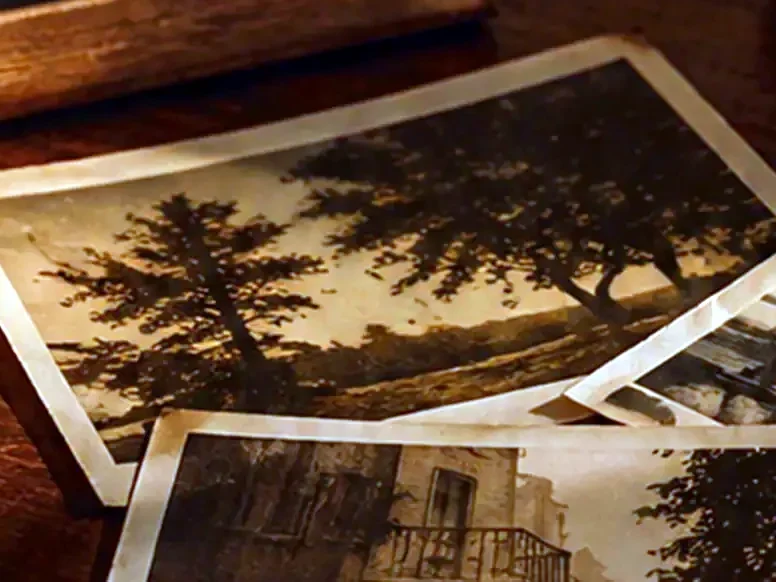
Most of us know the feeling. A smell from a neighbour's kitchen, a song in a taxi, an old photograph, and a moment we had not thought of in thirty years is suddenly there, whole. Psychologists call these involuntary memories, and they are an ordinary part of everyday life: most of them are set off by something around us that overlaps with the past.1
Available, but not accessible. In 1966, Endel Tulving and Zena Pearlstone showed that people who could not recall words from a list remembered many of them when they were given the right cue.2 The words had not gone; the way to them had. Tulving later explained why: a cue works best when it matches how the memory was first laid down.3 That is why being back in a place, or simply imagining it, helps us remember what happened there,4 why smells tend to call up memories from early in life,5 and why about one song in three brought back a memory in one study.6 Not everything is kept: some memories do fade for good,7 and we keep very little from before the age of three or four.8 But many memories that feel lost are still there, waiting for the right cue.
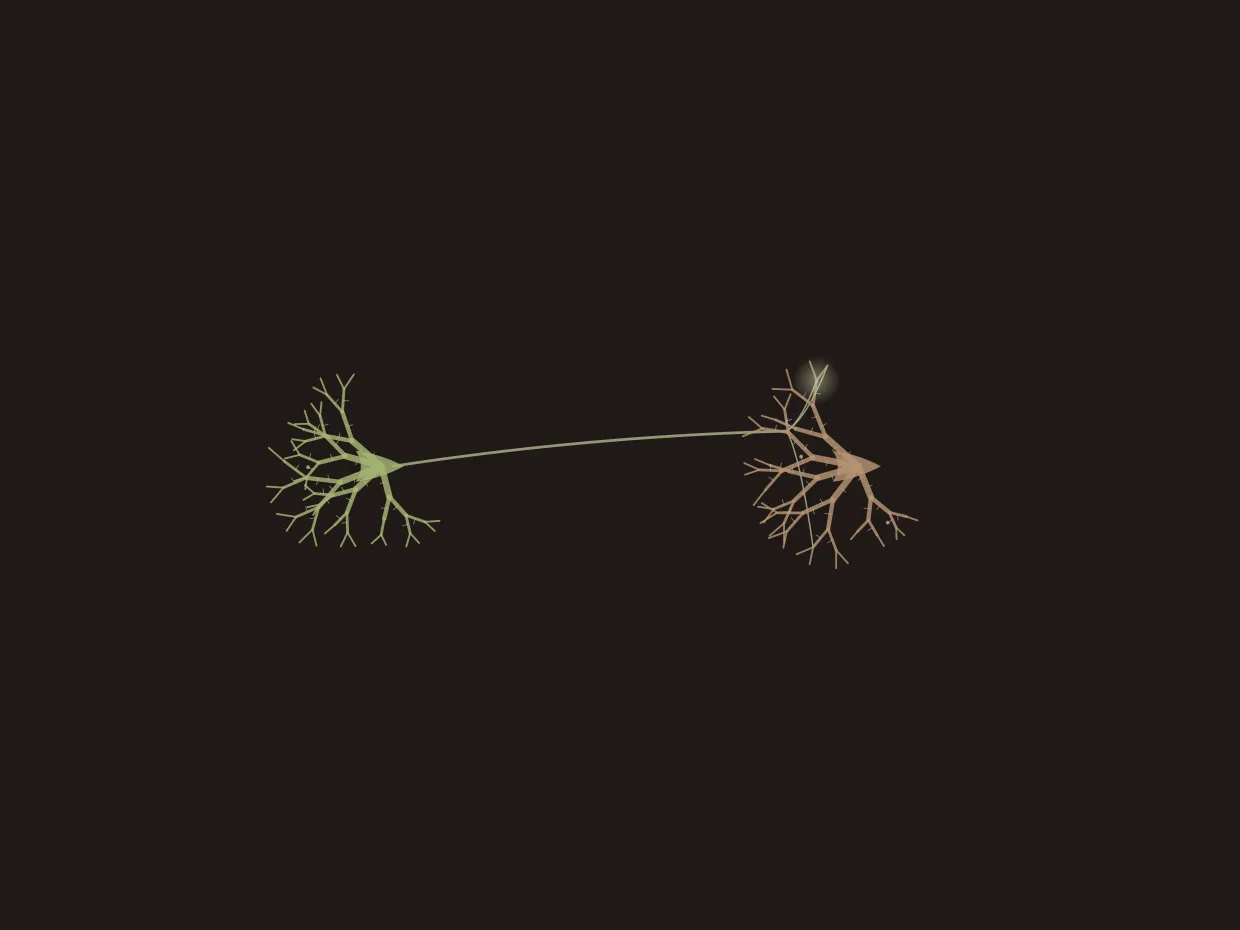
Engrams: the trace a memory leaves. In 1904 the German biologist Richard Semon gave a name to the lasting trace an experience leaves in us: the engram. He also named its reawakening by a cue: ecphory.9 A century later, neuroscientists found engram cells in the brains of mice. In one study, mice that could no longer recall a memory had it brought back when those cells were switched on with light;10 in another, so did mice with an early form of Alzheimer's disease.11 These are laboratory studies in animals, and no conversation can do what those tools do. In people the evidence is indirect.12 But they support Semon's old idea: a memory can be there even when we cannot reach it.
The right questions help. The Cognitive Interview, developed to help witnesses remember, asks people to go back to the setting in their mind, to say everything that comes up, however small, and to tell it in a different order or from another person's point of view.13 Across dozens of studies it brings out much more correct detail, with a small rise in errors.14,15 A Dig is not a police interview, but it works in the same spirit: small, unexpected routes into a memory, through the place, the people, the sounds and the smells, at your own pace.
Why digging together helps, and when it doesn't. The science here is honest about both sides. In the laboratory, groups of strangers recall less together than the same people recalling alone, because each person's way of remembering gets in the way of the others'.16 But people who know each other well, and cue each other well, can do the opposite: some long-married couples remember more together than apart,17 and after remembering in a group, people recall more on their own.16 Your sister remembers the name of the street; that unlocks the rest for you. The same conversations also blend our versions together,18 so a good group Dig lets each person tell their own memory first.
Rebuilt, not replayed. Remembering is not playing back a recording: each time, we rebuild the past, and suggestion can change what we rebuild.19,20 That is why a Dig asks open questions, never tells you what you should remember, and never pushes. What surfaces is yours, in your own words, as you remember it. Memories are not always lost. Often they are only waiting for the right question.
— Smritis
References
- Berntsen, D. (2010). The unbidden past: Involuntary autobiographical memories as a basic mode of remembering. Current Directions in Psychological Science, 19(3), 138–142. doi.org/10.1177/0963721410370301
- Tulving, E., & Pearlstone, Z. (1966). Availability versus accessibility of information in memory for words. Journal of Verbal Learning and Verbal Behavior, 5(4), 381–391. doi.org/10.1016/S0022-5371(66)80048-8
Show all 20 referencesShow fewer
- Tulving, E., & Thomson, D. M. (1973). Encoding specificity and retrieval processes in episodic memory. Psychological Review, 80(5), 352–373. doi.org/10.1037/h0020071
- Smith, S. M., & Vela, E. (2001). Environmental context-dependent memory: A review and meta-analysis. Psychonomic Bulletin & Review, 8(2), 203–220. doi.org/10.3758/BF03196157
- Chu, S., & Downes, J. J. (2000). Long live Proust: The odour-cued autobiographical memory bump. Cognition, 75(2), B41–B50. doi.org/10.1016/S0010-0277(00)00065-2
- Janata, P., Tomic, S. T., & Rakowski, S. K. (2007). Characterisation of music-evoked autobiographical memories. Memory, 15(8), 845–860. doi.org/10.1080/09658210701734593
- Hardt, O., Nader, K., & Nadel, L. (2013). Decay happens: The role of active forgetting in memory. Trends in Cognitive Sciences, 17(3), 111–120. doi.org/10.1016/j.tics.2013.01.001
- Bauer, P. J. (2015). A complementary processes account of the development of childhood amnesia and a personal past. Psychological Review, 122(2), 204–231. doi.org/10.1037/a0038939
- Semon, R. (1921). The Mneme (L. Simon, Trans.). George Allen & Unwin. (Original work published 1904.) archive.org/details/cu31924100387210
- Ryan, T. J., Roy, D. S., Pignatelli, M., Arons, A., & Tonegawa, S. (2015). Engram cells retain memory under retrograde amnesia. Science, 348(6238), 1007–1013. doi.org/10.1126/science.aaa5542
- Roy, D. S., Arons, A., Mitchell, T. I., Pignatelli, M., Ryan, T. J., & Tonegawa, S. (2016). Memory retrieval by activating engram cells in mouse models of early Alzheimer's disease. Nature, 531(7595), 508–512. doi.org/10.1038/nature17172
- Josselyn, S. A., & Tonegawa, S. (2020). Memory engrams: Recalling the past and imagining the future. Science, 367(6473), eaaw4325. doi.org/10.1126/science.aaw4325
- Fisher, R. P., & Geiselman, R. E. (1992). Memory-enhancing techniques for investigative interviewing: The cognitive interview. Charles C Thomas.
- Köhnken, G., Milne, R., Memon, A., & Bull, R. (1999). The cognitive interview: A meta-analysis. Psychology, Crime & Law, 5(1–2), 3–27. doi.org/10.1080/10683169908414991
- Memon, A., Meissner, C. A., & Fraser, J. (2010). The Cognitive Interview: A meta-analytic review and study space analysis of the past 25 years. Psychology, Public Policy, and Law, 16(4), 340–372. doi.org/10.1037/a0020518
- Marion, S. B., & Thorley, C. (2016). A meta-analytic review of collaborative inhibition and postcollaborative memory. Psychological Bulletin, 142(11), 1141–1164. doi.org/10.1037/bul0000071
- Harris, C. B., Keil, P. G., Sutton, J., Barnier, A. J., & McIlwain, D. J. F. (2011). We remember, we forget: Collaborative remembering in older couples. Discourse Processes, 48(4), 267–303. doi.org/10.1080/0163853X.2010.541854
- Hirst, W., & Echterhoff, G. (2012). Remembering in conversations: The social sharing and reshaping of memories. Annual Review of Psychology, 63, 55–79. doi.org/10.1146/annurev-psych-120710-100340
- Bartlett, F. C. (1932). Remembering: A study in experimental and social psychology. Cambridge University Press. doi.org/10.1017/CBO9780511759185
- Loftus, E. F. (2005). Planting misinformation in the human mind: A 30-year investigation of the malleability of memory. Learning & Memory, 12(4), 361–366. doi.org/10.1101/lm.94705